
Know where AI will make a difference before you build.
We work with AEC executives, technology leaders, and delivery teams to identify where AI can improve project delivery, business development, and operations, then give you a practical roadmap for the next 18 months.
An AI strategy should start with your business, not a vendor's product.
Move from scattered AI ideas to a decision you can defend.
Before the assessment
- Pursuit, project delivery, staffing, and finance data live in separate systems
- Teams repeat work across email, spreadsheets, project files, and core platforms
- AI ideas start with a tool instead of a business process
After the assessment
- Priority workflows are tied to business outcomes
- Existing tools are part of the evaluation
- Leadership can decide what to build, buy, test, or defer
When Subsurface Construction engaged Hallian Technologies for an AI Assessment in Spring 2025, we were looking for a place to start. We gained both a roadmap and a partner for the journey ahead.
AI is moving at an extraordinary pace, and the assessment helped us cut through the noise, see the possibilities, and begin charting a practical path forward. Just as important, Cameron earned my trust by recommending solutions that were right for Subsurface—even when those solutions weren't something Hallian offered. That told me Hallian was invested in our success, not simply in selling us a service.
Looking back, the AI Assessment was a no-brainer. I'm glad we took a first step, and I'm even more glad Hallian is walking alongside Subsurface as we explore what's possible.

We understand the systems around the work.
Your firm already runs on a network of systems and handoffs. We know the names: Unanet A/E, Unanet CRM, Deltek Vantagepoint, Deltek Ajera, BST, ADP, OpenAsset, Autodesk, and the spreadsheets, email, and file stores around them. We look at how those systems support pursuits, proposals, project delivery, staffing, finance, and knowledge transfer. Then we identify where AI can reduce repeated work, improve access to firm knowledge, and support better decisions without creating another disconnected tool.
- Pursuits, proposals, and go/no-go decisions
- Project delivery, documentation, and QA workflows
- Staffing, finance, resource planning, and knowledge transfer
A plan your leadership team can use
The assessment ends with decisions you can explain, prioritize, and take into implementation.
A shared direction
A clear link between your business vision and the AI opportunities worth considering.
A readiness picture
A grounded view of your workflows, data, existing tools, and governance constraints.
A prioritized roadmap
6-8 initiatives for the next 18 months, sequenced by impact, effort, and readiness.
A leadership-ready decision
A PDF and DOCX report, plus a presentation that helps your leadership team decide what to build, buy, test, or defer.
6 phases from questions to direction
The work usually takes about 8 weeks. We keep the process focused and bring leadership into the decisions.
Kickoff
We align on your business vision, confirm participants, and schedule the work.
Initial interviews
We speak with 5-8 stakeholders across leadership, IT, operations, delivery, and business development.
Follow-up interviews
We return to the questions that need more detail and test the themes emerging from the first conversations.
Analysis
We review your technology stack, data readiness, workflows, and governance needs against the opportunities we heard.
Reporting
We turn the findings into a written report with a prioritized set of initiatives and the reasoning behind each one.
Delivery
We present the roadmap to leadership, answer questions, and agree on the next step.
Bring the people who will own the outcome
The strongest assessments include 5-8 stakeholders across leadership, technology, and the teams closest to the work.
Leadership
An owner, principal, CEO, COO, or another leader who can connect AI priorities to the business vision.
Technology
An IT director, CTO, or MSP partner who can speak to systems, data, security, and constraints.
Delivery and operations
People from project delivery, business development, operations, and the workflows where AI may help.
An operator's perspective
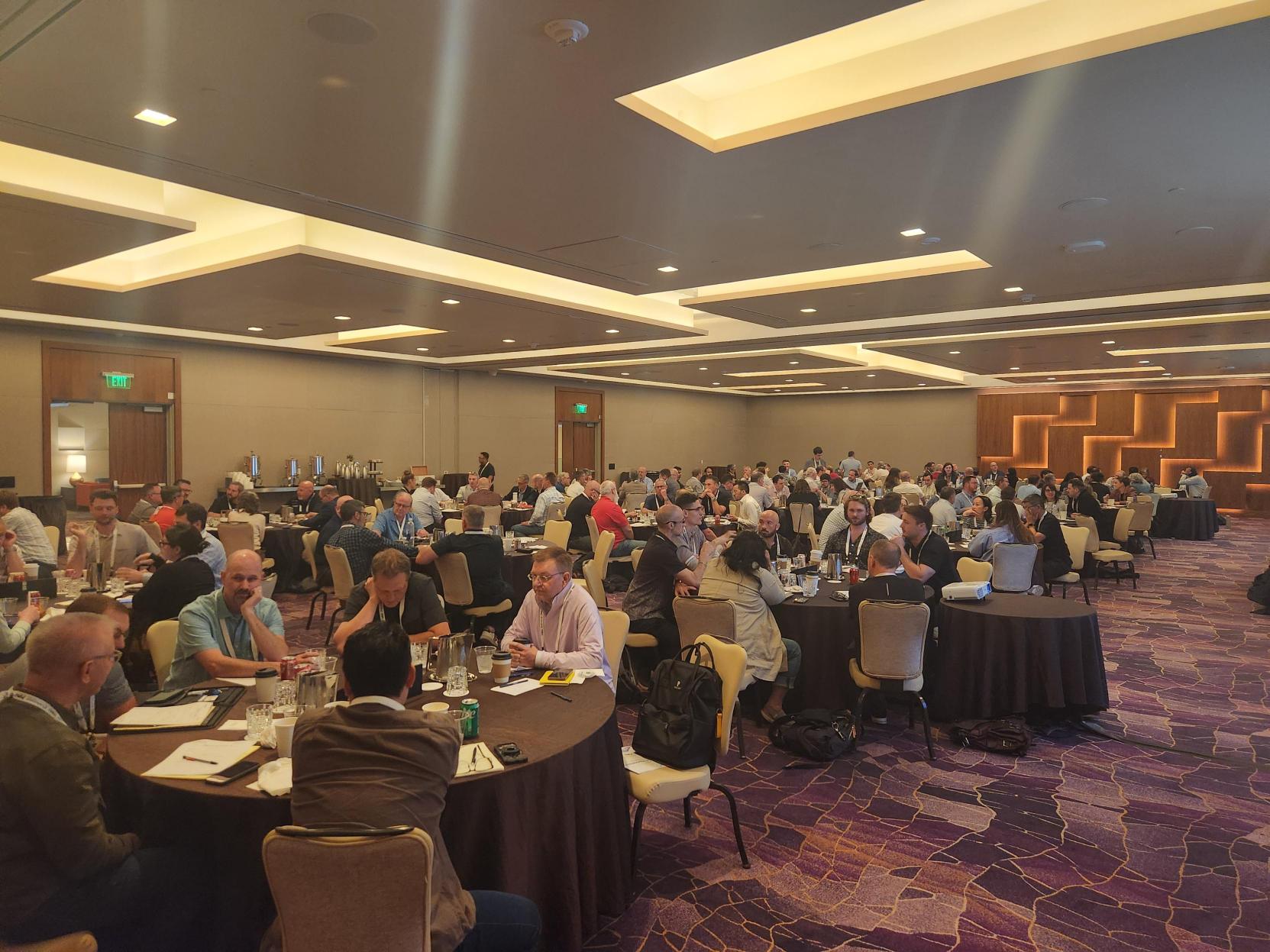
Cameron Duncan, co-founder of Hallian Technologies, spent 14 years in manufacturing leadership before founding Hallian. He has led teams through technology and operational change and understands the work required to turn a strategy into something people can use. That background informs how we run the assessment. We talk about what changes for your people, what your data can support, and what a responsible rollout requires. Cameron also facilitated the AEC AI Foundations Workshop at PSMJ AEC INNOVATE. The sold-out session had 150 AEC executives in attendance.

We do not just advise on AI. We build it.
Business first
Your roadmap is anchored to your vision and the work your people do, not a generic AI maturity model.
Implementation experience
We understand what it takes to connect data, build workflows, train teams, and deploy private AI.
A partner beyond the report
If implementation follows, we can help turn the recommendations into working capabilities. The decision about what comes next stays yours.
Start with a clear next step
Tell us what you are trying to accomplish, what is getting in the way, and where you want to go. We will help you decide if an assessment is the right place to start.